
I am a Ph.D. student in Electronic and Information Engineering at the School of Data Science, Fudan University, in a joint training program with Beijing Zhongguancun Academy. I am co-supervised by Prof. Jie Feng (Beijing Zhongguancun Academy) and Prof. Siming Chen (School of Data Science, Fudan University). Previously, I received my M.A. in Public Policy from Lanzhou University and my B.A. in Land Resource Management from Renmin University of China.
My current research focuses on spatial intelligence, agentic AI, and urban science. I am interested in systems that understand, simulate, and act in open real-world environments, especially cities. My interests include multimodal spatial reasoning, world models and embodied intelligence, multi-agent collaboration, and social simulation, with applications in urban governance and public services.
Previously, I worked on computational social science and environmental finance, focusing on climate and financial risks, spatial spillovers, and policy evaluation.
目前,我的研究聚焦空间智能、智能体与城市科学,探索能够理解、模拟并在真实环境中行动的智能系统,重点关注多模态空间推理、世界模型与具身智能、多智能体协作和社会模拟,服务于城市治理与公共服务。此前主要从事计算社会科学、环境金融、气候与金融风险、空间溢出及政策效应评估研究。
🔥 News
- 2026.09: I joined the School of Data Science at Fudan University as a Ph.D. student in Electronic and Information Engineering, with joint training at Beijing Zhongguancun Academy.
- 2025: 🎉 Three journal articles were published in Journal of Futures Markets, Journal of Environmental Management, and Finance Research Letters.
📝 Publications
* Corresponding author.
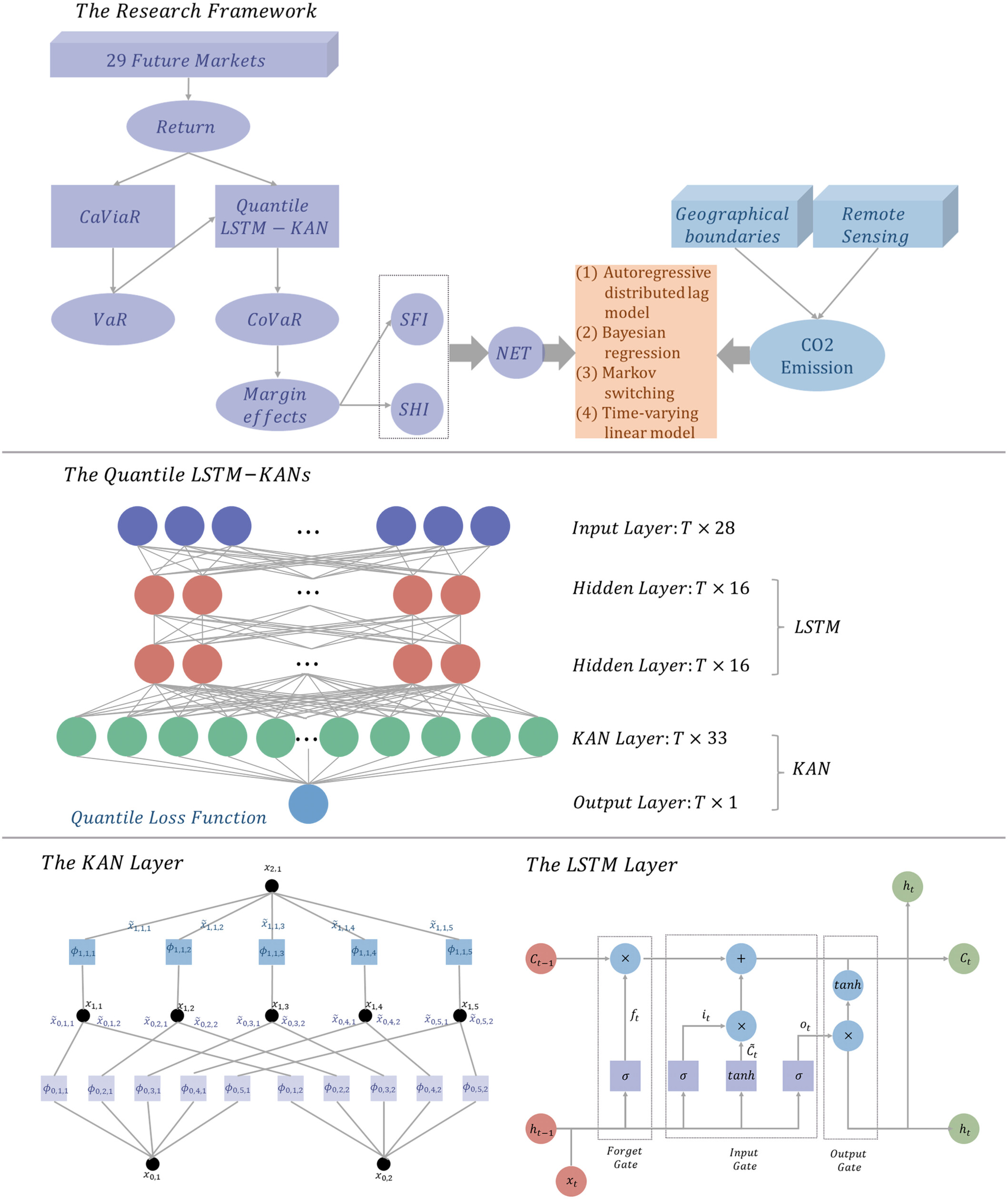
Does Cutting Carbon Emissions Reduce Tail Risk Spillovers? A Quantile LSTM-KAN-CoVaR Approach
Ziwei Wang, Yibo Liu*, Peng Lu
Paper | Journal of Futures Markets, 2025
- Develops a quantile LSTM-KAN-CoVaR framework for nonlinear, time-varying tail-risk spillovers across 29 European futures markets.
- Market fragility rises during Brexit and COVID-19; the Russia-Ukraine conflict also heightens risk in energy-sensitive futures.
- Brent oil, gas oil, and EU carbon allowance (EUA) futures receive substantial tail risk, while Euribor and bond futures are key risk transmitters.
- Higher carbon emissions are associated with greater incoming spillovers in EUA and low-carbon equity futures, with the latter effect more evident in tranquil markets.
- Emission effects depend on volatility: outgoing spillovers from oil-and-gas equity futures strengthen in calm regimes, while Brent crude futures receive more risk in turbulent regimes.
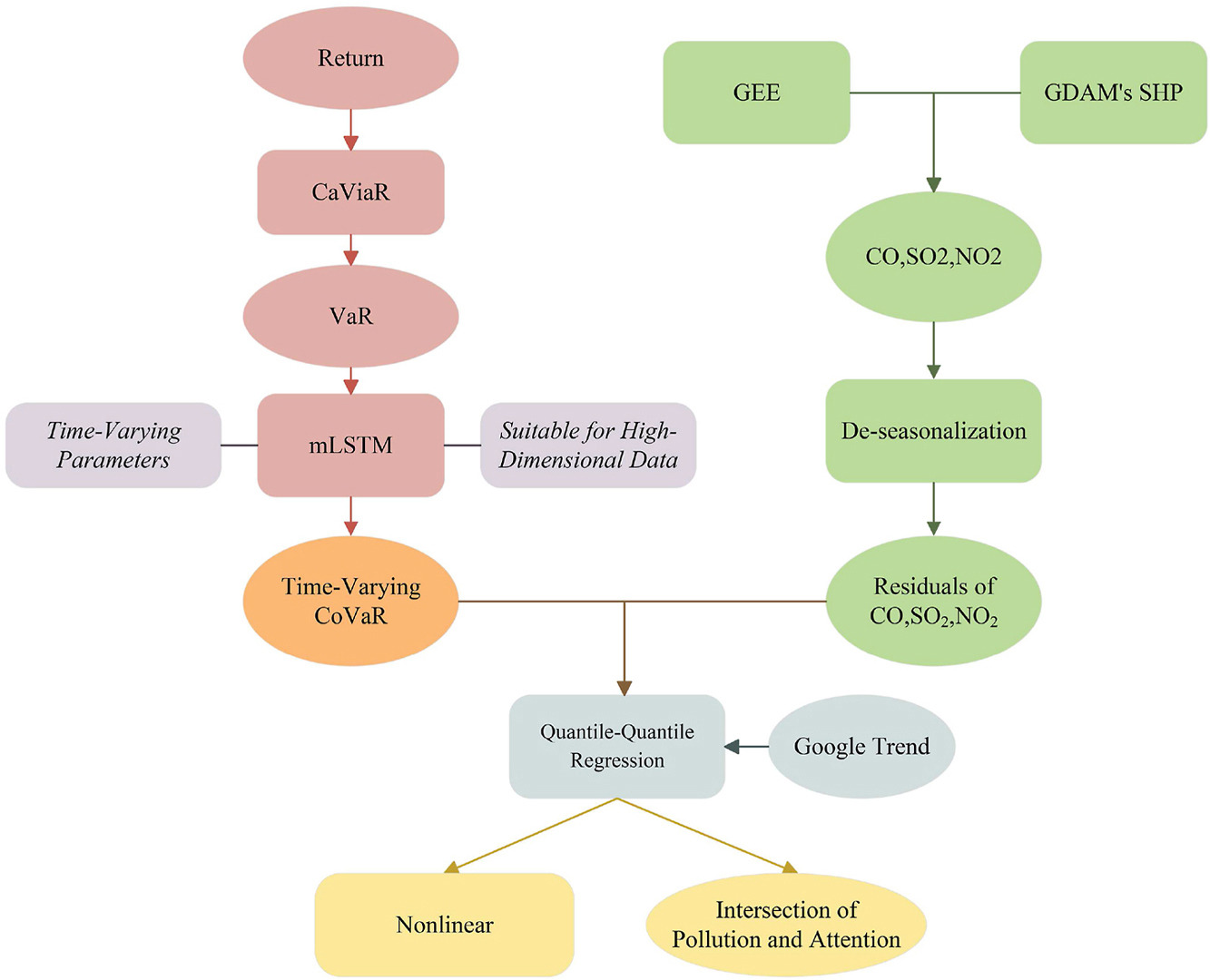
Ziwei Wang, Yibo Liu*
Paper | Journal of Environmental Management, 2025
- Combines satellite measures of CO, NOx, and SO2, Google Trends, and quantile mLSTM-CoVaR networks to study 26 banks across 12 EU countries.
- Bank tail risk rises sharply during COVID-19 and the Russia-Ukraine conflict, with no comparable increase during the Israel-Hamas conflict.
- Systemically important banks occupy the network core, while Northern European banks remain peripheral; Russia-Ukraine shocks are more uneven across energy-dependent countries.
- Pollution and systemic risk are linked nonlinearly: higher physical environmental risk generally raises bank fragility, with effects varying across pollution and risk quantiles.
- Investor attention amplifies pollution-related systemic risk mainly under normal market conditions; amplification is weaker at extreme systemic-risk levels.
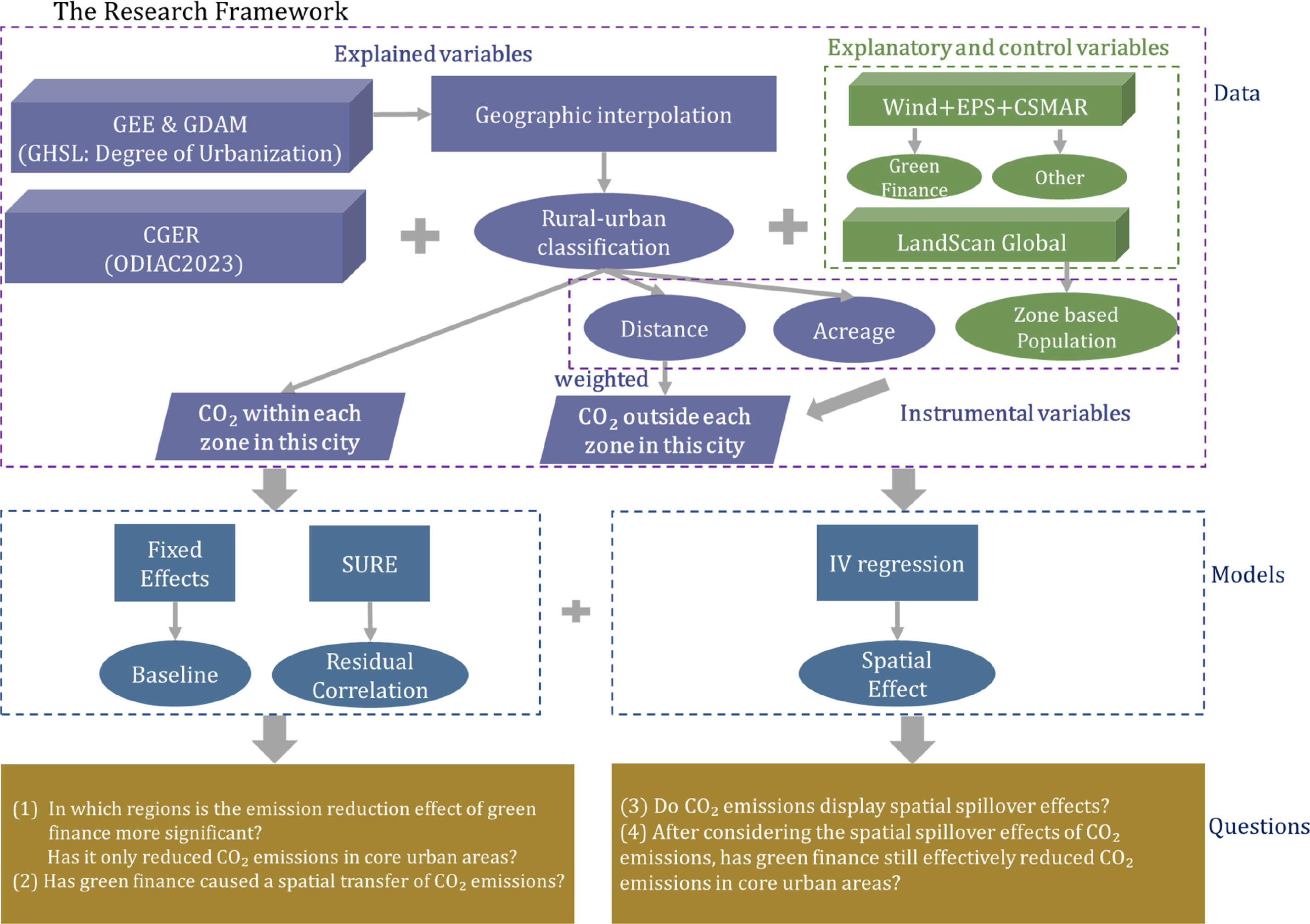
Green finance and micro-zone level carbon emissions
Peng Lu, Ziwei Wang, Yibo Liu
Paper | Finance Research Letters, 2025
- Uses remote sensing, GIS, and degree-of-urbanization classifications to examine green finance and carbon emissions across micro-zones within Chinese cities.
- Green finance significantly reduces emissions in urban centers, while reductions in surrounding suburban and rural zones are generally insignificant.
- SUR and spatial IV-GMM estimates identify higher emissions in dense urban clusters, consistent with potential relocation of carbon-intensive activity.
- Within-city emissions exhibit spatial spillovers, highlighting the need for coordinated green-finance policies and carbon accounting across urban centers and neighboring zones.
Working papers
- Linking Air Quality to Housing Markets: Idiosyncratic Effects, Spatial Spillovers, and Policy Insights.
- Urban-Rural Carbon Dynamics: Quantifying Heterogeneous Reduction, Leakage, and Spillover Effects of the EU ETS.
- Modelling and Forecasting Electricity Price Volatility with Climate Factors: Evidence from 16 European Countries.
🎖 Honors and Awards
- 2025, Individual Excellence Award & Outstanding Camp Participant, AI Future Program, Zhongguancun Academy & Zhongguancun Institute of Artificial Intelligence.
- 2025, Second-Class Graduate Academic Scholarship, School of Management, Lanzhou University.
- 2021, Charity Ambassador, Muli Tibetan Autonomous County Charity Association.
- 2018, Outstanding Paper Award, Beijing Traffic Engineering Association.
📖 Educations
- Sep 2026–Present, Fudan University, Ph.D. in Electronic and Information Engineering. School of Data Science; joint training program with Beijing Zhongguancun Academy.
- Sep 2023–Jun 2026, Lanzhou University, M.A. in Public Policy. Coursework in advanced econometrics, R, GIS and spatial analysis, environmental governance, and energy policy.
- Sep 2019–Jun 2023, Renmin University of China, B.A. in Land Resource Management. Coursework in microeconomics, macroeconomics, real estate finance, and geographic information systems.
💻 Research Projects
- Sep–Dec 2024, Evaluation of the Reform Pilot Program for Gansu Provincial State-Owned Capital Investment and Operation Companies. Principal investigator. Evaluated a provincial reform pilot commissioned by the Gansu Provincial Party Committee. The evaluation report received positive written comments from the Secretary of the Provincial Party Committee.
- May 2021–May 2022, Implementation of DRG Payment Reform from the Perspectives of Doctors and Patients. Research participant. Investigated the implementation of DRG payment reform in a municipal-level undergraduate innovation project and developed policy suggestions for hospital payment systems.
- May 2020–May 2021, Smart Campus Connect. National-level undergraduate entrepreneurship project. Developed a campus information-sharing platform to improve access to university information resources and student services.
🛠 Skills
- Programming and Data Analysis: R, Python, Stata; panel data models, spatial econometrics, machine learning, and financial risk analysis.
- Spatial Analysis and Visualization: ArcGIS, GIS spatial analysis, spatial visualization, research figure design, and model result visualization.
- Research Methods: Econometrics, policy evaluation, CoVaR models, LSTM-based forecasting, spatial spillover analysis, and environmental and financial data analysis.
- Languages: Chinese and English. CET-6: 541.
✉️ Contact
Email: liuybbob@163.com
GitHub: Klxxz001